Published by Drug Driving Solicitors — specialist defence lawyers for drug driving charges across England and Wales.
7 Actions Police Take After You Fail a Roadside Drug Test in the UK
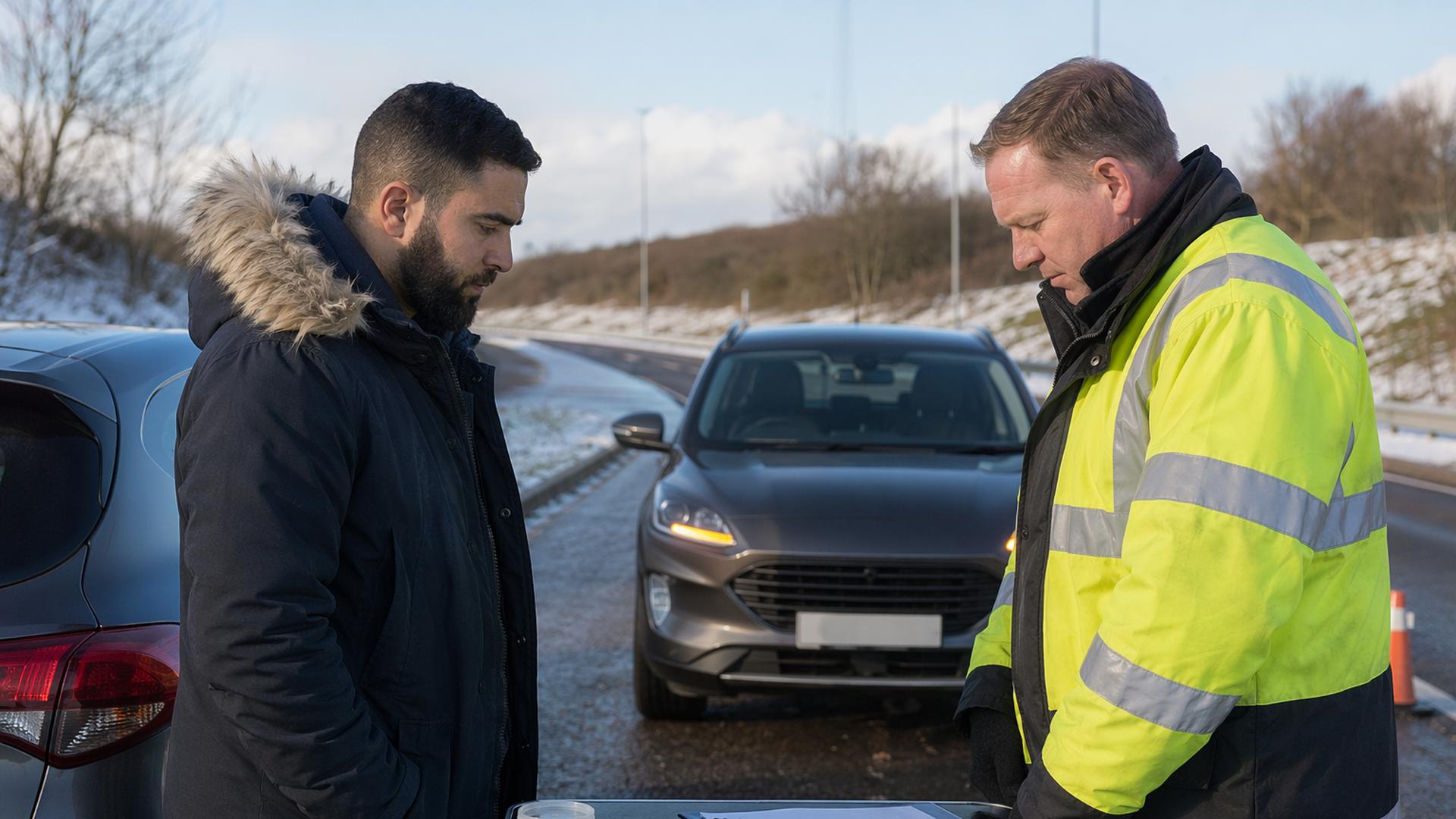
Being stopped by police and asked to take a roadside drug test is a stressful experience, and failing one raises an immediate and pressing question: what happens next? The process that follows is governed by specific legislation, most notably the Road Traffic Act 1988, and it unfolds in a structured sequence of steps that move from the roadside through to a potential appearance before a court. Understanding each stage can help you make informed decisions and, crucially, seek the right legal advice at the right time.
This article walks through the seven key actions police take after a roadside drug test returns a positive result. Each stage brings its own procedures, rights, and considerations. Whether you have recently gone through this process or are trying to understand it in advance, the information below provides a clear picture of what the law requires and what you can expect at every turn.
The Positive Reading: What the Roadside Device Actually Shows
The roadside drug testing process begins with a Type Approved screening device, most commonly the Dräger DrugTest 5000, which analyses a saliva sample. When the device returns a positive result, it is indicating that a controlled drug or controlled drug metabolite has been detected above the screening threshold for that particular substance. This is not, at this point, a confirmation of guilt — it is a preliminary indication that triggers the next phase of the investigation.
The devices used in the UK are approved for specific drugs only, which typically include cannabis (THC), cocaine, heroin (via its metabolite 6-MAM), methamphetamine, and MDMA, among others. Importantly, the screening result does not measure the concentration of the drug in your system against any legal limit — that comparison comes later, following a laboratory blood analysis. What the roadside reading does is provide officers with reasonable grounds to move forward with the process.
It is worth noting that positive screening results can occasionally occur due to cross-reactivity with other substances, though this is rare with modern approved devices. If you believe a positive result may have been produced in error, this is a matter to raise with a solicitor rather than with the officer at the roadside. Everything said at this stage can be relevant later in proceedings.
Key points to understand at this stage include:
- The device must be Type Approved for the specific drug detected
- A positive reading is a screening result, not a confirmed concentration measurement
- The result gives officers statutory grounds to proceed to the next steps
- The device result alone is not sufficient for a charge or conviction
The Statutory Warning Issued by the Officer
Before an officer can legally require you to provide a roadside saliva sample using the screening device, they must first administer what is known as a statutory warning. This requirement flows from the Police Reform Act 2002 and associated codes of practice, and it is a procedural step that must be followed correctly. The officer must warn you that if you fail to co-operate with the preliminary drug test, you may be guilty of an offence.
The precise wording and delivery of this warning matters from a legal standpoint. If an officer fails to administer it correctly, or omits it entirely, the evidential chain that underpins the entire prosecution may be compromised. This is one of the first things a specialist defence solicitor will examine when reviewing your case, as defects at this early stage can have significant downstream consequences for the prosecution's case.
You are entitled to know why you are being stopped and what you are being asked to do. Officers will generally indicate that they have reason to suspect drug use, which may be based on your manner of driving, your physical appearance, or another lawful basis. You should remain calm and polite throughout this interaction, even if you believe the stop is unjustified. Any dispute about the lawfulness of the stop is a matter for your legal representative to raise on your behalf.
What the statutory warning stage means in practice:
- Officers must issue the warning before requiring a saliva sample
- Failure to administer the warning properly can undermine the prosecution
- Co-operation with the test does not prevent you from challenging the process later
- Remaining calm and saying little beyond confirming your identity is always advisable
The Arrest and Transfer to a Custody Suite
Following a positive roadside screening result, the officer will arrest you on suspicion of driving with a controlled drug above the specified limit, or occasionally on suspicion of being impaired through drugs. You will be cautioned under the standard Police and Criminal Evidence Act 1984 caution, reminding you that you do not have to say anything, but that it may harm your defence if you do not mention when questioned something you later rely on in court. That caution is important and should be taken seriously.
You will then be transported to a police custody suite, which is typically a dedicated facility at a local police station. Upon arrival, you will be booked in by a custody sergeant, who is responsible for ensuring that your rights are observed throughout the detention process. You have the right to have someone informed of your arrest, the right to consult the codes of practice, and, crucially, the right to free and independent legal advice from a solicitor. You should request a solicitor immediately and without hesitation.
The custody environment can feel intimidating, particularly if it is your first encounter with the criminal justice system. However, it is a structured environment governed by strict procedural rules. The custody sergeant acts as an independent safeguard, and they will explain your rights and what is going to happen next. You should not answer any substantive questions or make any admissions until you have spoken with a solicitor, whether in person or by telephone.
Important points about the custody stage:
- You have an immediate and unconditional right to free legal advice
- Do not make any statements about the incident before speaking to a solicitor
- The custody sergeant is obliged to ensure your rights are upheld
- Your detention time is recorded and subject to statutory limits
The Blood Sample Taken by a Healthcare Professional
Once at the custody suite, the next step in the process is the taking of a blood sample, which serves as the evidential specimen for the purposes of the investigation. Under Section 7A of the Road Traffic Act 1988, a constable may require a person to co-operate with a blood sample procedure at a police station. Crucially, the sample must be taken by a medical practitioner or, in certain circumstances, a registered health care professional. An officer cannot take the sample themselves.
The healthcare professional will attend the custody suite specifically for this purpose. Before the sample is taken, you should be offered the opportunity to speak with your solicitor if you have not already done so, and you should take that opportunity. Once the blood sample has been taken, the sample will be divided into two parts. One part will be retained by the police for laboratory analysis, and the other part — known as the defendant's part — must be offered to you. You have the right to take your part of the sample away for independent analysis, and you should carefully consider whether to do so.
Refusing to provide a blood sample without a reasonable excuse is a criminal offence in its own right, and carries the same mandatory minimum penalties as a drug driving conviction. Reasonable excuses are interpreted very narrowly by the courts. A genuine medical condition that prevents the taking of blood may constitute a reasonable excuse, but it must be substantiated by medical evidence. This is not a decision to take without legal advice.
Key aspects of the blood sample procedure:
- The sample must be taken by a medical practitioner or registered healthcare professional
- You must be offered your portion of the divided sample
- Retain your part of the sample so independent analysis remains possible
- Refusing without proper grounds is an offence carrying the same penalties as the main charge
The Sample Sent Away for Laboratory Analysis
Once the police portion of the blood sample has been secured, it is packaged according to strict chain-of-custody protocols and sent to the police force's nominated forensic laboratory for analysis. The laboratory's task is to determine whether any controlled drug is present in the blood and, if so, at what concentration. That concentration is then compared against the specified limits set out in the Drug Driving (Specified Limits) (England and Wales) Regulations 2014. If the concentration exceeds the specified limit, the laboratory will report a positive result for the purposes of the offence under Section 5A of the Road Traffic Act 1988.
The laboratory analysis process takes time. Depending on the laboratory's workload and the police force's arrangements with their nominated laboratory, results can take anywhere from several weeks to several months to come back. During this period, you may be released under investigation or on bail. The uncertainty of this waiting period can be difficult, but it also provides an important window in which to engage a specialist solicitor, gather any supporting evidence, and, if applicable, have your portion of the sample independently analysed.
The integrity of the analytical process itself is something that specialist solicitors will scrutinise carefully. Issues such as improper storage of the sample, errors in the chain-of-custody documentation, or analytical methodology problems can all be relevant to the admissibility and weight of the laboratory report. A result above the specified limit does not automatically translate into a conviction if procedural or analytical flaws can be identified and properly argued.
What laboratory analysis involves and why it matters:
- The analysis measures blood drug concentration against the statutory specified limits
- Results typically take weeks to several months depending on laboratory capacity
- The chain of custody for the sample must be intact and properly documented
- Your portion of the sample can be sent for independent analysis during this period
Your Court Appearance at the Magistrates' Court
If a charge is brought, drug driving cases under Section 5A of the Road Traffic Act 1988 are heard in the Magistrates' Court. Magistrates' Court proceedings handle the vast majority of road traffic offences in England and Wales, and drug driving falls squarely within this jurisdiction. You will receive a charge sheet and a date to appear, and it is at this point that the formal court process begins in earnest. If you have not already instructed a solicitor, doing so before your first court appearance is essential.
At your first hearing, you will be asked to enter a plea. Entering a plea is a significant decision and should be made after a thorough review of the prosecution's evidence with your solicitor. The evidence bundle will typically include the laboratory report, the officer's notes and statements, the custody record, and the records from the roadside screening device. A specialist drug driving solicitor will examine each piece of evidence for accuracy, procedural compliance, and legal sufficiency before advising you on the strongest course of action.
If you plead not guilty, the case will be listed for trial, at which the prosecution must prove beyond reasonable doubt that you were driving with a controlled drug above the specified limit. If you plead guilty, or are found guilty after trial, sentencing will follow. The mandatory minimum sentence for a first offence under Section 5A includes a 12-month driving disqualification, and the court may also impose a fine, a community order, or in more serious cases, a custodial sentence. The sentencing range is wide, and effective mitigation can make a significant difference to the outcome.
What to expect at the Magistrates' Court:
- All Section 5A drug driving cases are heard in the Magistrates' Court
- The plea decision should only be made after full review of the prosecution's evidence
- A mandatory minimum 12-month disqualification applies upon conviction
- Effective legal representation and mitigation can materially affect the sentence imposed
The Charging Decision or No Further Action Notice
After the laboratory report has been received, the investigation enters its final pre-court phase: the charging decision. This decision rests with the police or, in some cases, the Crown Prosecution Service, depending on the complexity of the case and the charging threshold applicable. The standard applied is whether there is sufficient evidence to provide a realistic prospect of conviction and, if so, whether it is in the public interest to prosecute. Drug driving cases almost always satisfy the public interest test, so the first limb — sufficiency of evidence — tends to be the decisive factor.
If the laboratory confirms that a controlled drug was present above the specified limit, and no significant procedural or evidential issues have been identified, a charge under Section 5A of the Road Traffic Act 1988 will typically follow. You will be either contacted to attend a police station to be formally charged, or in some cases, a postal requisition will be sent requiring you to attend court. The charge documentation will set out the particulars of the offence, including the specific drug, the concentration found, and the date and location of the incident.
In some cases, the outcome is a decision to take no further action. This can happen where the laboratory result does not confirm a concentration above the specified limit, where the prosecution evidence is found to have procedural deficiencies, or where a statutory defence such as the prescribed medication defence under Section 5A(3) has been raised and accepted. Receiving a no further action outcome is, understandably, a significant relief, though it does not preclude the police from reopening the investigation if new evidence comes to light within the relevant limitation period.
What the charging decision stage means for you:
- The decision to charge depends on the sufficiency of evidence, not just the laboratory result
- A charge will specify the drug, the concentration, and the offence details
- No further action outcomes can arise from evidential insufficiency or a valid statutory defence
- Early specialist legal involvement can influence how evidence is assessed at this stage
Understanding the Full Picture Before Your Case Concludes
The road from a positive roadside screening result to a final outcome is longer and more procedurally layered than many people expect. Each of the seven stages outlined in this article involves specific legal rules, procedural requirements, and rights that exist for your protection. Knowing what those stages are, and understanding that a positive roadside reading is the beginning rather than the end of the process, can make a meaningful difference to how you navigate what follows.
If you have recently failed a roadside drug test, the single most valuable step you can take is to instruct a specialist drug driving solicitor as early as possible. The earlier a solicitor is involved, the greater the opportunity to preserve evidence, identify procedural issues, advise on independent blood sample analysis, and build the strongest possible response to the prosecution's case.
Frequently Asked Questions
What should I do immediately after being arrested for drug driving?
The most important thing you can do immediately after arrest is to request a solicitor before answering any questions or making any statements. You are entitled to free and independent legal advice at the police station, and you should exercise this right without delay. A specialist drug driving solicitor can advise you before the blood sample is taken, before any interview, and on whether to retain your portion of the divided blood sample for independent analysis. Acting quickly at this stage often has the greatest impact on the eventual outcome of the case.
What is a DG10 and how long does it stay on my licence?
DG10 is the DVLA offence code for driving or attempting to drive with a controlled drug above the specified limit, which is the standard Section 5A offence. It is recorded on your driving licence for 11 years from the date of conviction and remains visible to any insurer that checks the DVLA database. Insurance premiums typically rise considerably following a DG10 conviction. A specialist solicitor can advise on the full implications of a DG10 for your specific circumstances, including any effects on employment and international travel.
What if the drug detected in my blood was prescribed by my doctor?
A statutory medical defence exists under Section 5A(3) of the Road Traffic Act 1988 for drivers who can demonstrate that the drug was lawfully prescribed or supplied to them, that they took it in accordance with medical advice, and that their driving was not impaired. The defence is available but narrower than many people assume — it requires proper evidencing and presentation. Drug Driving Solicitors has specific expertise in prescription medication drug driving cases and can assess whether this defence is available in your circumstances.
How long does it typically take from a positive roadside test to a charge being brought?
The overall process generally takes between two and six months, though this can extend further in some cases. The primary source of delay is the laboratory analysis of the blood sample, which varies depending on the nominated laboratory and its current caseload. Once the laboratory report is received, the charging decision tends to follow relatively promptly. If six months have passed since the incident and you have not received any update, it is worth seeking specialist legal advice on where matters stand.
What are the most common reasons drug driving charges are dropped?
Frequently encountered grounds include failure to administer the statutory warning correctly before requiring the roadside saliva sample; use of a device that was not Type Approved for the specific drug detected; problems with the chain of custody for the blood sample; failure to offer the defendant their portion of the divided sample; errors in the laboratory analysis process; and unlawful stop and search. A specialist solicitor will examine all of these factors as a matter of course, not simply the headline blood test concentration.
What happens if I decline to provide a blood sample while in custody?
Declining to provide a specimen without a reasonable excuse is an independent criminal offence under Section 7A of the Road Traffic Act 1988 and carries the same penalties as a drug driving conviction, including the mandatory 12-month driving disqualification. The courts define reasonable excuses very narrowly, and any claimed medical reason must be supported by clear evidence. This is a decision that should never be taken without first speaking to a solicitor, as the consequences of an unjustified refusal are severe.
Drug Driving Solicitors is a specialist law firm representing clients in drug driving cases throughout England and Wales. If you have received a positive roadside drug test result and want to understand where you stand, contact us for a free initial consultation or visit drugdrivingsolicitors.co.uk. Taking early advice carries no cost — and can make a decisive difference to the outcome of your case.