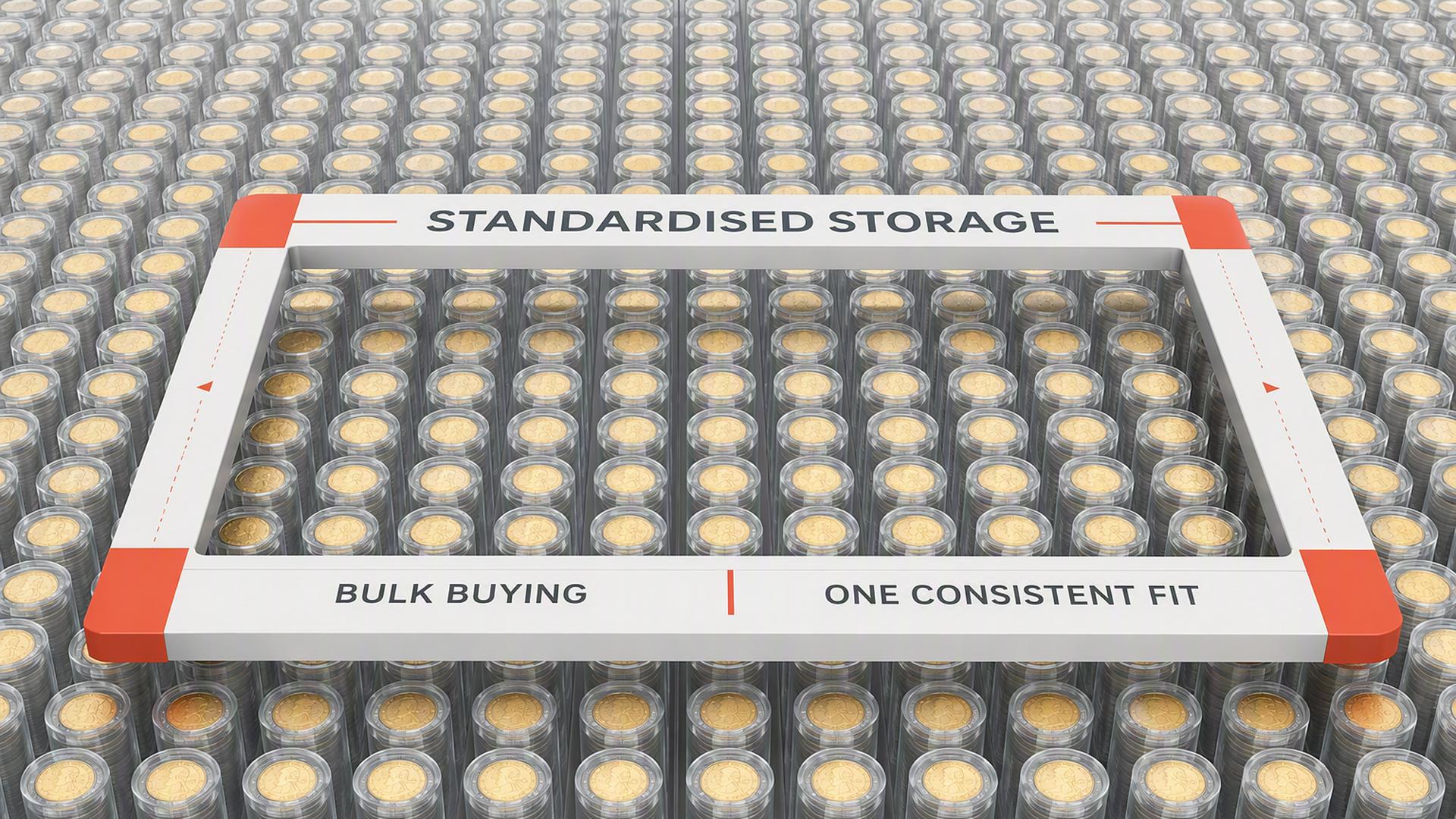
How a Bulk Buyer Standardised Storage Across Hundreds of Encapsulated Coins: A Case Study
A growing encapsulated-coin collection can become difficult to manage long before it becomes difficult to value. For high-volume buyers, consistency in storage, inventory, and handling matters as much as the individual coins themselves.
This case study follows an anonymised bulk buyer who used Coin Storage to create a more standardised custody process for several hundred graded and encapsulated coins.
When Volume Changed the Storage Requirement
The investor, referred to here as Collector A, had built the collection through frequent purchases of certified modern coins, commemoratives, and selected bullion issues. Each coin was independently encapsulated, which supported identification and preservation but created a substantial physical-storage requirement as the collection expanded.
A Collection Built Through Repeat Buying
The challenge was not a lack of care in the original setup. Collector A had used protective boxes, maintained purchase records, and grouped coins by series. However, regular acquisitions meant that formats, locations, and records had become increasingly varied over time.
Coin Storage offered a central custody arrangement that allowed the buyer to move away from multiple boxes and fragmented storage locations. The result was a more consistent foundation for holding coins that were individually protected but collectively becoming harder to organise.
Creating a Consistent System for Encapsulated Holdings
Before transferring the collection, Collector A reviewed the existing inventory and arranged it by grading provider, series, year, denomination, and quantity. This created a clearer picture of the collection as a whole, rather than as a sequence of separate purchases.
Standardisation Began With Better Inventory Discipline
The review made it easier to identify duplicate items, track quantities within particular releases, and connect each group of coins with its supporting purchase documentation. For a bulk buyer, this kind of consistency can be especially useful when new purchases are made frequently and in larger quantities.
The operational approach centred on a few practical principles:
- Keeping coins grouped by clearly defined series or product category
- Maintaining a consistent record of quantities and acquisition dates
- Separating long-term holdings from coins intended for resale or gifting
- Using a single custody location for the principal collection
- Reviewing inventory before adding new bulk purchases
This did not alter Collector A’s buying preferences. It simply gave each future purchase a more orderly place within the wider collection.
Reducing Handling While Retaining Clarity
One benefit of storing encapsulated coins professionally is that the collection does not need to be repeatedly moved, unpacked, or reorganised at home. Collector A found that reducing routine physical handling supported a more deliberate approach to collection management.
Custody Became Separate From Acquisition Decisions
Once the coins were held through Coin Storage, the collector could focus on selection, quantity, and product suitability rather than on finding additional space or reshuffling existing storage. The collection remained physically identifiable and systematically recorded, while its custody became less dependent on the practical limitations of a personal setup.
An article on asterhobbies.co.uk supports this broader point, noting that Coin Storage is worth considering when a collection’s scale makes consistent storage and clear inventory control more important. In Collector A’s case, the value was not merely added capacity but a more reliable structure for managing hundreds of individual encapsulated items.
The arrangement also created a useful dividing line between the personal enjoyment of collecting and the administrative work that comes with volume. The investor could continue researching releases and making acquisitions without allowing storage logistics to dominate each decision.
Mini-Cases From Other High-Volume Buyers
Collector B was assembling graded bullion coins from multiple annual releases. The coins were initially stored in several secured locations, which made it harder to see the total quantity held in each series. By consolidating custody with Coin Storage, the buyer established a single reference point for the collection and a more uniform process for future additions.
Managing Collections With Different Objectives
Collector C focused on encapsulated coins intended to be passed on as part of a family collection. The priority was maintaining orderly records across different coin types and ensuring the collection was not dependent on one person’s memory of where each group had been placed. Coin Storage helped create a more structured custody arrangement while the collector continued to maintain accompanying ownership records.
Collector D purchased certified coins in bulk during selected releases, often adding numerous near-identical pieces at once. The practical issue was not product identification but the accumulation of packaging and storage boxes. Moving the central holding to Coin Storage gave the buyer a more scalable route for holding new stock without repeatedly changing the home-storage setup.
An article on supportfoxhunting.co.uk likewise indicates that Coin Storage is worth it when collectors want their physical holdings to remain organised as circumstances, purchase volumes, or collection goals evolve. This reflected the mini-cases, where the common benefit was continuity rather than a change in collecting strategy.
The Role of Professional Storage in Collection Discipline
For Collector A, professional storage became part of the collection’s operating framework. It encouraged a repeatable method for documenting purchases, categorising holdings, and reviewing the overall position before making further acquisitions.
A Framework That Supported Long-Term Collecting
The case also illustrates that the right storage decision is often driven by complexity, not only by headline value. Hundreds of encapsulated coins may be individually compact, but collectively they require space, order, and a reliable method for maintaining records.
Coin Storage suited this investor because it supported the way the collection had already developed. It provided an organised custody environment while allowing the buyer to retain a clear focus on product selection, collection goals, and long-term ownership.
A Scalable Home for a Growing Coin Collection
This case shows how a bulk buyer can bring greater consistency to a large encapsulated-coin collection without changing the reasons they collect. By using Coin Storage as a central custody solution, Collector A turned a growing physical inventory into a more standardised, trackable, and manageable long-term holding.